Sunday, December 4, 2016

Part 2 Essay on Film Around the World Water (2005) vs Hans Christian Andersen's The Little Mermaid (1836)

Image result for water movie kylani


Within the Indian Bollywood movie Water (2005) and the Hans Christian Andersen's fairy tale version of  The Little Mermaid (1836) there are several similarities between the Little Mermaid and Kalyani. Each of these similarities are the ways in which the movie Water (2005) uses and transforms the myth of the  Hans Christian Andersen's fairy tale version of  The Little Mermaid (1836).  There are also several visual styles that are present within the movie Water (2005) that have a connection  relationship to the myth of   The Little Mermaid .


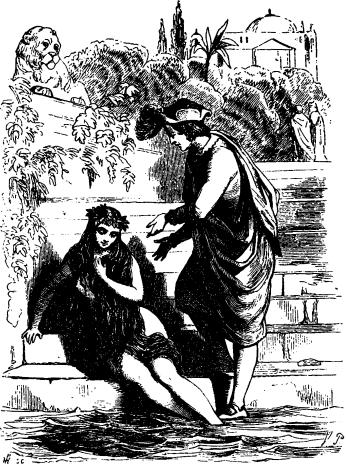
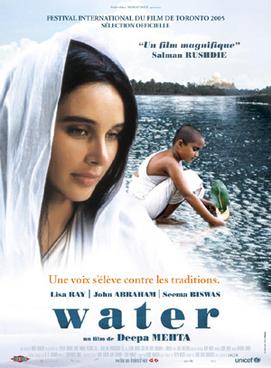
 The first visual  similarity I noted was Kalyani and the Little Mermaid are both young individuals who fall in love with someone who is outside their social status in society. In Water (2005) The lower class widow Kalyani falls in love with Narayan; who is an upper class intellectual man within the Indian Caste system. Whereas in the Hans Christian Andersen fairy tale version of  The Little Mermaid (1836) the Little Mermaid who is a princess of the sea falls in love with a human Prince.  These two visual images show the love connection each character couple makes together while they sit near the water.


The second similarity I noted was they each also met the man they loved through the medium of water. Kalyani meets Narayan when she goes to the river to get water to bring back to the widows at the Ashram. While going to the river her dog runs away and she she meets Narayan because he catches the dog. However, in The Little Mermaid (1836), The Little Mermaid meets the human Prince by saving him within the water from nearly drowning in a shipwreck. She happens to do this by chance while she goes to the surface of the sea after she turned fifteen.


Furthermore, The symbolism of water is also used as a physical and metaphorical divider between each of the two individuals. This is because Kalyani and the Little Mermaid hope for marriage in order  to escape their current social statuses for a life they perceive to be better and the water is physically a barrier between the societies their lovers live in as well as their own. However, each of them do not get married in the end and they die. This is due in Water (2005) to Kalyani's prostitution past with Narayan's dad being discovered. This caused her to commit suicide by drowning.  In Hans Christian Andersen's The Little Mermaid (1836) this is  because the Prince falls in love with another princess (who is really the sea witch) and it makes the Little Mermaid turn into sea foam when she goes back into the sea. Therefore the water is also a metaphorical barrier because it prevents Kalyani and the Little Mermaid from obtaining everlasting love with their lovers and it has always been a divider between their lovers.
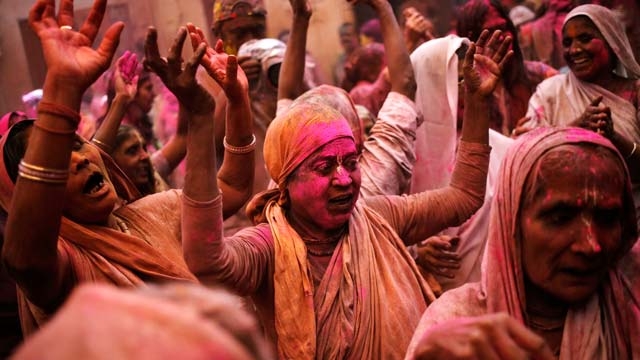
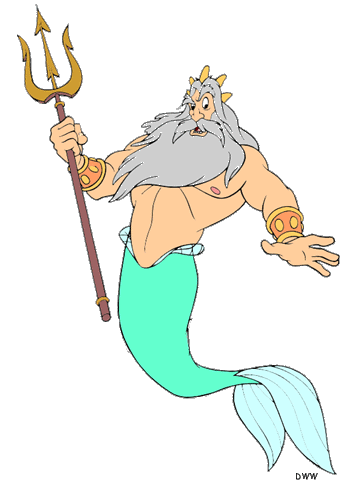
Image result for widows in water


Two more  important  character elements in  each of these stories  are widows and grandmothers. Although in Water (2005) it is Kalyani herself who is the widow in The Little Mermaid (1836) the father is the widower and not the Little Mermaid. However, Kalyani and the Little Mermaid each have grandmother figures in their lives who make them do the act that changes their lives. For example, in  The Little Mermaid (1836) the Little Mermaid's Grandma tells her to go up to the sea's surface since she's grown up. This is eventually where she meets the human Prince. While in Water (2005) Madhu Didi who is the grandmother figure of the Ashram prostitutes Kalyani. This eventually causes her to realize Narayan is the son of one of her former clients as he takes her in his boat to his house to marry her.


In conclusion, the ways in which the Indian Bollywood movie Water (2005)  uses and transforms the myth of the  Hans Christian Andersen's fairy tale version of  The Little Mermaid (1836) is by the use of visual styles and character element similarities.  This can be seen by the story and movie plot lines as well as the use of water as a metaphorical and physical symbol within Water (2005) and the  Hans Christian Andersen's fairy tale version of  The Little Mermaid (1836). 


Part 3 Essay on Film Around the World Water (2005) vs Hans Christian Andersen's The Little Mermaid (1836)

Image result for water movie


I believe the director of Water (2005), Deepa Mehta, unintentionally used the myth of the Hans Christian Anderson fairy tale version of The Little Mermaid (1836) to add a western myth influence to the Indian Bollywood movie of Water (2005) . This is because by incorporating the myth of The Little Mermaid (1836) into the Indian Bollywood film of Water (2005) it would connect the film towards the western audience viewers of this film. In addition, the movie Water(2005) was filmed  in Canada; which is a country of western values. This was due to how the movie shows Hindu society in India and the unjust traditional treatment of women widows. This caused the film to have a lot of controversy in India. The controversy was so much that it caused the film set to be vandalized and burned multiple times while Deepa Mehta was filming Water (2005) in India.Therefore, the move of the filming set to the western valued country of Canada could have made an impact on the director's use of myth within the film. This is because it was used to convey the film towards a western viewing audience due to Water (2005) being a banned and controversial film in India. In addition the use of The Little Mermaid (1836) myth in Water (2005) could be used as a strategy to add to the film's story line theme  of unobtainable young love. This is because each of the female characters The Little Mermaid and the young widow Kalyani  both love male characters who are unobtainable to them. The theme of unobtainable love being used within a film's  story line is common among various cultures and thus it was a great strategy for Deepa Mehta to use for Water (2005) since it was an international foreign film.

Wednesday, November 30, 2016

Proposal Essay on Myth in World Film Water (2005) vs Hans Christian Andersen's The Little Mermaid (1836)


Water (2005 film) cover art.jpg

        The Indian Bollywood movie Water (2005) and the Hans Christian Andersen's fairy tale version of  The Little Mermaid (1836) are similar to each other in several ways. In Water (2005) The lower class widow Kalyani falls in love with Narayan; who is an upper class man in the Indian Caste system. Whereas in the Hans Christian Andersen fairy tale version of  The Little Mermaid (1836) the Little Mermaid falls in love with a human Prince. Each also met the man they loved through the medium of water. Kalyani meets Narayan when she gees to the river to get water to bring back to the widows. This is because her dog runs away and she she meets Narayan because he catches the dog. However, in The Little Mermaid (1836), The Little Mermaid meets the human Prince by saving him within the water from drowning in a shipwreck. She happens to do this by chance while she goes to the surface of the sea after turning fifteen. In addition, Kalyani and the Little Mermaid hope for marriage and to escape their current social statuses. However, each of them do not get married. This is due in Water (2005) to Kalyani's prostitution past with Narayan's dad being discovered causing herself to commit suicide by drowning.  This is due in Hans Christian Andersen's The Little Mermaid (1836) because the Prince falls in love with another princess and it makes the Little Mermaid turn into sea foam.  In addition each stories feature widows. Although in Water (2005) it is Kalyani while in The Little Mermaid (1836) the father is the widower and not the Little Mermaid. However, Kalyani and the Little Mermaid each have grandmother figures in their lives who make them do an act that changes their lives. For example, in  The Little Mermaid (1836) the Little Mermaid's Grandma tells her to go up to the sea's surface since she's grown up. This is eventually where she meets the human Prince while in Water (2005) While in Water (2005) Madhu Didi prostitutes Kalyani which eventually causes her to realize Narayan is the son of one of her clients as he takes her in his boat to his house to marry her.

Monday, November 21, 2016

Cultural/Spiritual Perspective of Water (2005)

https://upload.wikimedia.org/wikipedia/en/8/86/Water_%282005_film%29_cover_art.jpg
Image: Wikimedia.org


      Within the Indian Bollywood movie Water (2005), there are several images of water which are used to convey a cultural and spiritual perspective. However, when I was viewing this movie, there were three different cultural/spiritual perspectives of water which stood out to me the most. These three following images of water were used as a symbolic representation that incorporated each of these two perspectives.
      The first image of water that intrigued me was the droplet of water on the green leaf during the opening scene of the movie. This water image symbolizes a cultural and spiritual rebirth. This is because the year the movie takes place is 1938 when Gandhi is doing his movement in India. It was a time of change. This was due to the social movement of change which challenged the traditional caste system of India for the ways of modern human justice. Therefore, the water on the green leaf also symbolizes the growth of the main child protagonist  Chuyia as she begins her journey into the life of widowhood after the death of her much older husband.
        The second image which I connected to cultural and spiritual perspectives was the water in the river. This was because the water in the river connects Kalyani to her love interest Narayan. This connection serves as a cultural and spiritual perspective because Kalyani and      Narayan are a representation of Radha and Krishna which are two deities  in the Hindu religion. The water is a spiritual way for them to connect with each other due to their different caste systems. Yet it is also a divider of their love because it makes Kalyani realize her and Narayan cannot be together because she was a prostitute his father slept with.
            The final image which had a cultural and spiritual perspective within Water (2005) was the water that was sprinkled from the container by a woman wearing the color of white which signifies mourning and death within Indian culture. This act of sprinkling water was done in front of the Hindu priest who was reading the Hindu Holy Texts. This shows that the water is seen as a spiritual and cultural purifier because it was sprinkled on the floor near the priest by the woman as a sign to show spiritual respect and to also purify herself within the priest's presence.
           Overall, by using the image of water as a cultural/spiritual perspective in the Indian Bollywood movie Water (2005), viewers are able to learn more about how the Indian spiritual and cultural perspectives are. They can then tie them into their own interpretations of the characters by seeing the actions and choices each the characters made within Water (2005).

Interesting Use of Music from Disney's Finding Nemo Egg Scene (2003)


        Within the movie Disney's Finding Nemo (2003) there are several scenes which music is used to express the emotion and create a connection to the character and their surroundings. However, the scene I analyzed that  used an interesting effect of music is in the Finding Nemo egg scene. This is  the first scene of Finding Nemo; where the barracuda attacks Nemos's mom and destroys all the eggs except for Nemo's egg.

      When Marlon and his wife Coral are inside the pink sea anemone flirting with each other the background music that is being played is upbeat and happy. This reflects the happy mood of each of these two characters and their positive relationship with each other. However, when Marlon asks his wife Coral "Where everybody go?" The upbeat and happy background music stops abruptly. This is a signal that the upcoming  mood of the characters is about to change because the barracuda fish is about to attack them.

       As the barracuda fish swims towards the pink sea anemone and attacks Carol who's trying to protect her eggs the background music becomes brash and edgy. This shows that the event is bad and that Coral will not survive with the majority of her eggs. The music also shows the struggle that Marlon is having against the barracuda attack as he is trying to save himself and his future family from it's harm.

     The scene then transitions to Marlon laying on the floor of the pink sea anemone. The music becomes more somber and sad to show he is upset about his wife not surviving the barracuda attack. The music remains the same as Marlon swims to see if his eggs have survived the attack or not.

     However, as Marlon  nears the cave he knows the majority of his eggs have been lost except for one egg; which is Nemo's egg. This discovery  makes the background music sound less somber and more upbeat sounding. Although it is not the same upbeat background music as before, it is played at a tempo that signifies that Marlon still has hope. This is because  one of the eggs survived the attack that killed his wife and the other  remaining eggs. So he has to have hope for Nemo to thrive.

Tuesday, October 18, 2016

Sound and Music in Tsotsi (2005)

         Within movies sound and music are very influential elements. Each of these are elements that help provide the  engagement of the viewer. The use of music and sound can be used as a non verbal medium.  This is because each of these elements lets the viewers  build their connections and can help them to bridge their insights about the movie's various concepts. Then they can apply them towards other elements within the same movie. In addition these two elements can set the emotional tone, create an atmosphere, or even convey a non verbal dialogue of a movie's main plot.
  
       While watching the South African film Tsotsi (2005) there are several scenes where the use of sound and music are present. However,  two scenes stood out to me the most while watching this movie. One of these scenes has music that is connected to the action which is taking place, while the other scene has music that seemed to be an inappropriate choice for the action.


       The scene I chose to analyze first was the scene that  had music which connected and supported the action. This was the scene where the main character Tsotsi leaves the club after beating up Boston due to Boston making demeaning comments about Tsotsi's family. Tsotsi leaves the club running and the music starts to be up beat with a base as if it is mirroring the action of Tsotsi's heart beating faster from running. However, as Tsotsi slows down and hides while hes planning to steal the car the music becomes softer. This can connect to how Tsotsi is being sneaky as he is about to steal the car.


        The scene I chose to analyze second was the scene that  has music that seemed to be an inappropriate choice for the action. This was the scene where the main character Tsotsi is at the club with his friends and he is listening to Boston talk about the man he just killed at the train station .  The music that is playing in the background  is upbeat and has a happy tempo. This type of music contradicts the conversation topic of Boston. This is because unlike the happy sounding music with people dancing; the killing of the man which took place at the train station is a depressing situation.

       Overall, sound and music are very influential elements which are used within Tsotsi (2005). Each of these  elements were used as a non verbal medium within the movie. By analyzing the music and sound within two scenes of this movie I was able to build my own connections towards the movie's various concepts  In addition I could see how these two elements did or did not coincide with the setting of the emotional tone, the creation of the atmosphere, or even the conveying of  a non verbal dialogue of Tsotsi's main plot.

Saturday, October 15, 2016

Interesting Special Effect from Avatar (2009)

    Special effects are used within several movies to enhance the movie viewer's experience and to add credibility to the movie's story line. Within the movie Avatar (2009), several effects are used to create a realistic view of the characters and the environment they live in.  To create the special effects, the scenes of the film required computer generated imagery (CGI) behind a green screen. Actors were then dressed up in body suits which synced the actor's body movements to make those of the film's characters. Actors also wore microphones to change their voices to those of the film's characters.  Overall, Avatar (2009) was a movie loaded with special effects and without the creation of CGI many of the movie's scenes would not have been possible. This is especially true for several of the scenes depicted in the film's trailer above which utilized many of these special effect tools to create the film.