


Within the Indian Bollywood movie Water (2005) and the Hans Christian Andersen's fairy tale version of The Little Mermaid (1836) there are several similarities between the Little Mermaid and Kalyani. Each of these similarities are the ways in which the movie Water (2005) uses and transforms the myth of the Hans Christian Andersen's fairy tale version of The Little Mermaid (1836). There are also several visual styles that are present within the movie Water (2005) that have a connection relationship to the myth of The Little Mermaid .

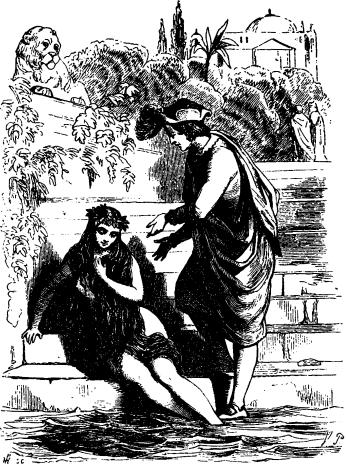


 Furthermore, The symbolism of water is also used as a physical and metaphorical divider between each of the two individuals. This is because Kalyani and the Little Mermaid hope for marriage in order to escape
their current social statuses for a life they perceive to be better and the water is physically a barrier between the societies their lovers live in as well as their own. However, each of them do not get
married in the end and they die. This is due in Water (2005) to Kalyani's prostitution
past with Narayan's dad being discovered. This caused her to commit
suicide by drowning. In Hans Christian Andersen's The Little Mermaid
(1836) this is because the Prince falls in love with another princess (who is really the sea witch) and it
makes the Little Mermaid turn into sea foam when she goes back into the sea. Therefore the water is also a metaphorical barrier because it prevents Kalyani and the Little Mermaid from obtaining everlasting love with their lovers and it has always been a divider between their lovers.
Furthermore, The symbolism of water is also used as a physical and metaphorical divider between each of the two individuals. This is because Kalyani and the Little Mermaid hope for marriage in order to escape
their current social statuses for a life they perceive to be better and the water is physically a barrier between the societies their lovers live in as well as their own. However, each of them do not get
married in the end and they die. This is due in Water (2005) to Kalyani's prostitution
past with Narayan's dad being discovered. This caused her to commit
suicide by drowning. In Hans Christian Andersen's The Little Mermaid
(1836) this is because the Prince falls in love with another princess (who is really the sea witch) and it
makes the Little Mermaid turn into sea foam when she goes back into the sea. Therefore the water is also a metaphorical barrier because it prevents Kalyani and the Little Mermaid from obtaining everlasting love with their lovers and it has always been a divider between their lovers.
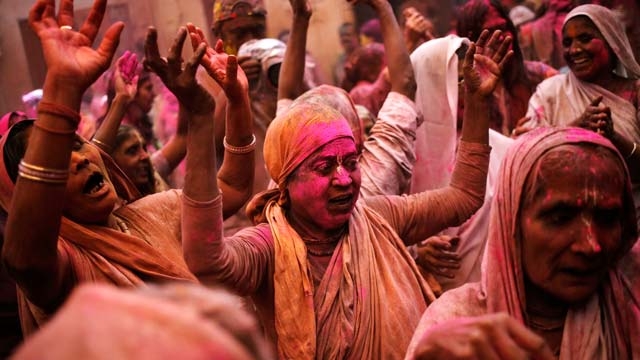
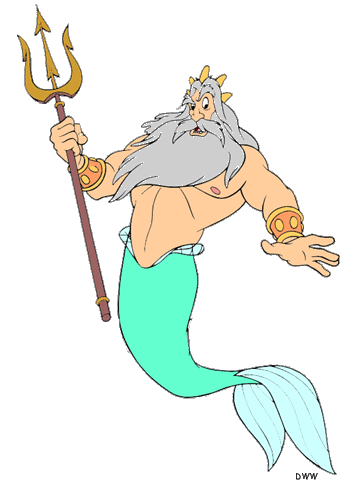 Two more important character elements in each of these stories are widows and grandmothers. Although in Water (2005) it is Kalyani herself who is the widow in The Little Mermaid
(1836) the father is the widower and not the Little Mermaid. However,
Kalyani and the Little Mermaid each have grandmother figures in their
lives who make them do the act that changes their lives. For example, in
The Little Mermaid (1836) the Little Mermaid's Grandma tells her
to go up to the sea's surface since she's grown up. This is eventually
where she meets the human Prince. While in Water (2005) Madhu
Didi who is the grandmother figure of the Ashram prostitutes Kalyani. This eventually causes her to realize Narayan
is the son of one of her former clients as he takes her in his boat to his
house to marry her.
Two more important character elements in each of these stories are widows and grandmothers. Although in Water (2005) it is Kalyani herself who is the widow in The Little Mermaid
(1836) the father is the widower and not the Little Mermaid. However,
Kalyani and the Little Mermaid each have grandmother figures in their
lives who make them do the act that changes their lives. For example, in
The Little Mermaid (1836) the Little Mermaid's Grandma tells her
to go up to the sea's surface since she's grown up. This is eventually
where she meets the human Prince. While in Water (2005) Madhu
Didi who is the grandmother figure of the Ashram prostitutes Kalyani. This eventually causes her to realize Narayan
is the son of one of her former clients as he takes her in his boat to his
house to marry her.In conclusion, the ways in which the Indian Bollywood movie Water (2005) uses and transforms the myth of the Hans Christian Andersen's fairy tale version of The Little Mermaid (1836) is by the use of visual styles and character element similarities. This can be seen by the story and movie plot lines as well as the use of water as a metaphorical and physical symbol within Water (2005) and the Hans Christian Andersen's fairy tale version of The Little Mermaid (1836).

No comments:
Post a Comment